
Cultural itineraries and metropolitan thematic circuits
The vast geography and density of attractions in Mexico City make an orderly structuring of time essential to avoid inefficient travel and visual exhaustion. We propose circuits designed under curatorial and urban planning criteria, intended for stays of varying duration and organized into coherent historical hubs.
Design criteria for urban itineraries
Planning tours of the capital requires considering key factors: the opening hours of cultural venues (most of which close on Mondays), peak traffic saturation hours (from seven to ten in the morning and six to nine at night), and the marked meteorological alternation between clear mornings and rainy afternoons in summer. Our circuits group buildings within the same walkable perimeter, reducing the need for motorized vehicles and prioritizing leisurely walking along historic roads. It is recommended to tackle only one metropolitan quadrant per day to deeply assimilate the historical layers of each district.
The Monday barrier
Almost all museums under the INAH and INBAL suspend activities on Mondays for collection conservation. Dedicate these days to open-air spaces, civic plazas, the UNAM, or external tours of Porfirian and colonial architecture.
Radial travel
Crossing from the colonial north to the lacustrine south during rush hour can take up to two hours. Structure visits where the first long-distance trip occurs before 08:30 and the return is delayed until after 20:30.
Solar window and evening rain
Between May and October, rainfall usually starts punctually from 16:30. Dedicate mornings to open-air vestiges (Teotihuacán, Templo Mayor, Cuemanco) and reserve afternoons for indoor galleries and pinacothecas.
Essential 3-day itinerary: the foundational heart
Designed for a first critical immersion in the metropolis, this circuit condenses the three decisive heritage poles of the Mexican highlands.
Integral Historic Center
Morning start at theTemplo Mayor Archaeological Siteand its site museum, observing the seven stages of Mexica superimposition and the monoliths of Coyolxauhqui and Tlaltecuhtli.
Continuation towards theMetropolitan Cathedralto analyze the Altar of the Kings and the New Spanish wooden choir. Walk along the Madero pedestrian street with analytical stops at thePalacio de Iturbide(Fomento Cultural Banamex) and the Churrigueresque facade covered in talavera of theCasa de los Azulejos.
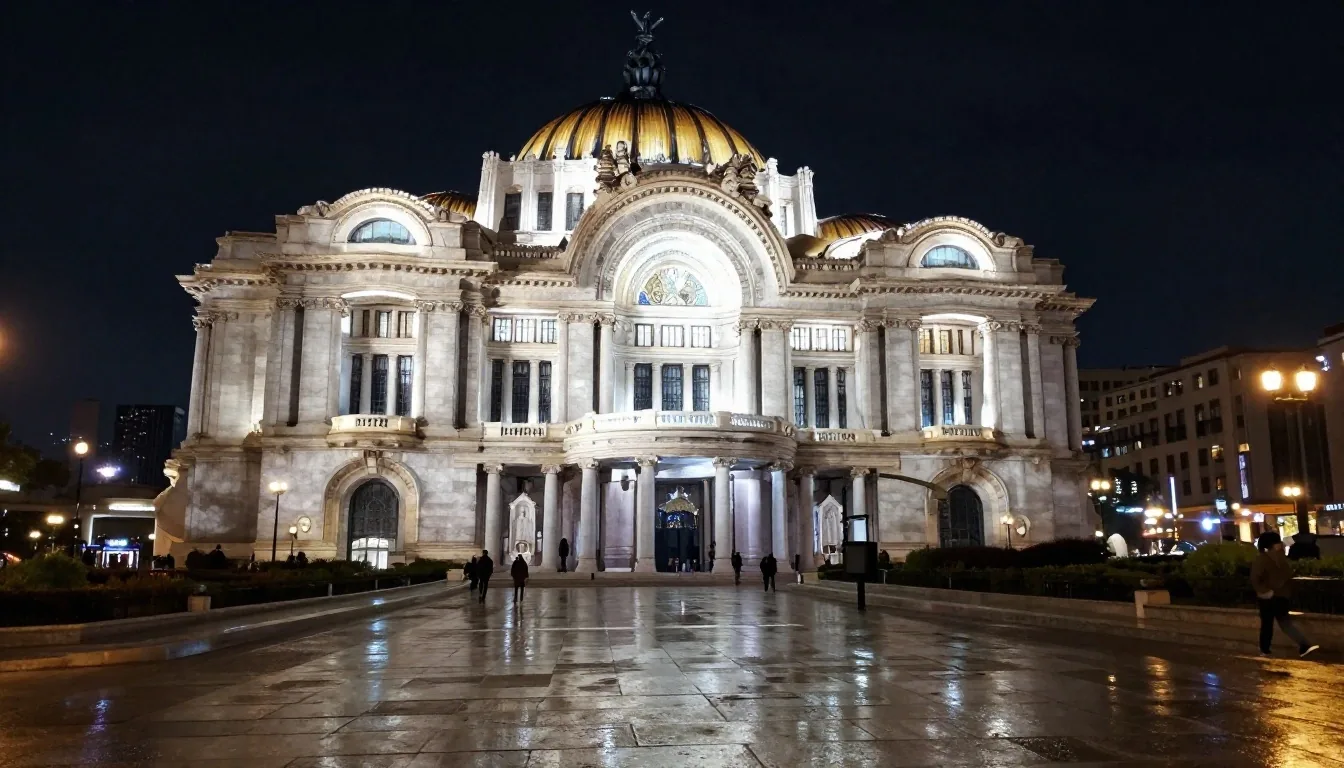
End of the day in front of the monumental murals of thePalacio de Bellas Artesand an evening walk through the tree-lined walkways of the Alameda Central.
- 09:00 - Templo Mayor and monoliths 2h 30m
- 12:00 - Cathedral and Madero street 1h 45m
- 15:30 - Bellas Artes and Alameda 2h 15m
Chapultepec Forest and imperial memory
Full morning concentrated in the core rooms of theNational Museum of Anthropology: Introduction to Anthropology, Mexica Room (Sun Stone, Coatlicue) and the vast Maya Room with its replicas of stelae and Palenque crypts.
Quiet pause in the adjacent botanical gardens and ascent on foot along the tree-lined ramp towards theChapultepec Castle(National Museum of History). Tour of the chambers of Maximilian and Carlota, the Porfirian salons, and contemplation of the rectilinear perspective of the Paseo de la Reforma from the western alcazar.
- 09:30 - National Museum of Anthropology 3h 30m
- 14:00 - Transit through the park and lunch 1h 30m
- 15:30 - Chapultepec Castle 2h 00m
Colonial South and artistic intimacy
Morning tour through the traditional town ofSan Ángel: visit to the Museo de El Carmen with its mummified crypts and talavera cloisters, followed by a quiet walk through the cobblestone alleys of Plaza San Jacinto.
Connection via Francisco Sosa Avenue toward the heart ofCoyoacánto access theFrida Kahlo Museum (Casa Azul)on Londres Street during your reserved time. Reflective conclusion at the Parish and former convent of San Juan Bautista and the Hidalgo and Centenario gardens.
- 10:00 - San Ángel and Museo del Carmen 2h 00m
- 13:00 - Francisco Sosa Street and traditional lunch 2h 00m
- 15:30 - Casa Azul (strict access) 1h 45m
Extended 5 to 7-day itinerary: archaeology and avant-garde
For more relaxed stays, the three foundational days are supplemented with explorations that broaden the temporal landscape: from the monumental urbanism of the Classic period in the northeastern valley to the bold collective solutions of mid-twentieth-century functionalism.
Altiplano Archaeology and Tlatelolco
Full-day excursion to the Teotihuacán Archaeological Zone, touring the Avenue of the Dead, the Citadel, the Palace of Quetzalpapálotl, and the Beatriz de la Fuente Mural Museum. Afternoon return for a quiet visit to the Plaza of the Three Cultures in Tlatelolco, where pre-Hispanic foundations dialogue with the Templo de Santiago Apóstol and Mario Pani's multi-family housing units.
Lacustrine landscape and intangible heritage
Morning ecological boat trip from the Cuemanco pier in Xochimilco to learn about traditional chinampas, hydro-agricultural farming, and axolotl refuges in the wildlife reserve area. Afternoon connection to San Ángel Inn to explore the Diego Rivera and Frida Kahlo House Studio Museum designed by Juan O’Gorman in 1931.
Institutional muralism and graphic archive
Monographic tour of the Antiguo Colegio de San Ildefonso, cradle of modern muralism; visit to the courtyards of the Secretariat of Public Education (SEP) with its three levels of fresco murals created by Diego Rivera between 1923 and 1928, and an afternoon stay at the National Museum of Art (MUNAL) in front of the equestrian statue of Charles IV.
Architectural modernity and University City
Circuit of modern and rationalist architecture: central campus of University City (Rectory Tower with murals by Siqueiros, Central Library with stone mosaic by O’Gorman, and Olympic Stadium). Connection during an exclusive reserved time to the Luis Barragán House in the Tacubaya neighborhood, a masterpiece of Mexican emotional intimism.
Mexican muralism thematic route
The 1920s witnessed the emergence of the muralist movement, a public art form conceived to politically educate citizens on the walls of State buildings. This specialized route allows you to chronologically trace its conceptual maturation through four canonical sites in the metropolitan center.
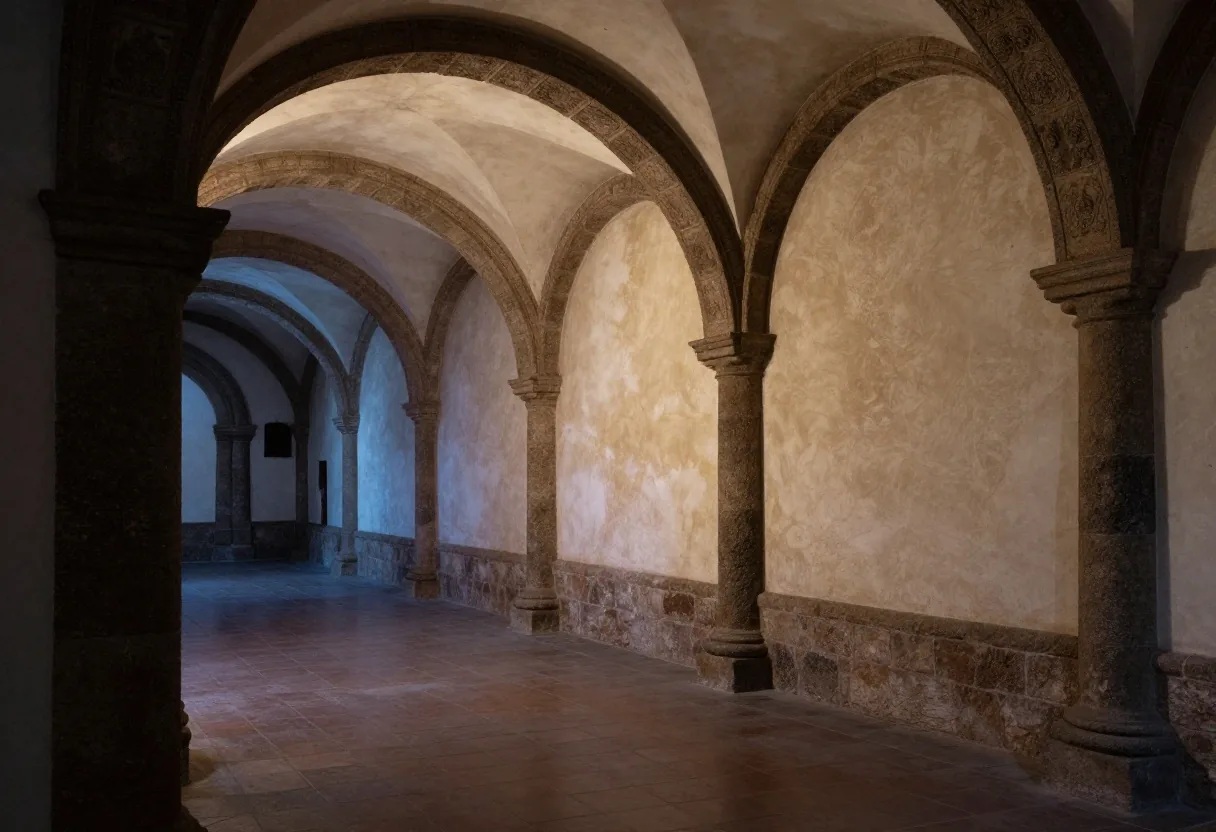
Antiguo Colegio de San Ildefonso
Space where José Clemente Orozco captured his harrowing vision of the Conquest and the proletarian struggle on the walls of the main courtyard, alongside the first encaustic compositions by Diego Rivera in the Simón Bolívar Amphitheater.
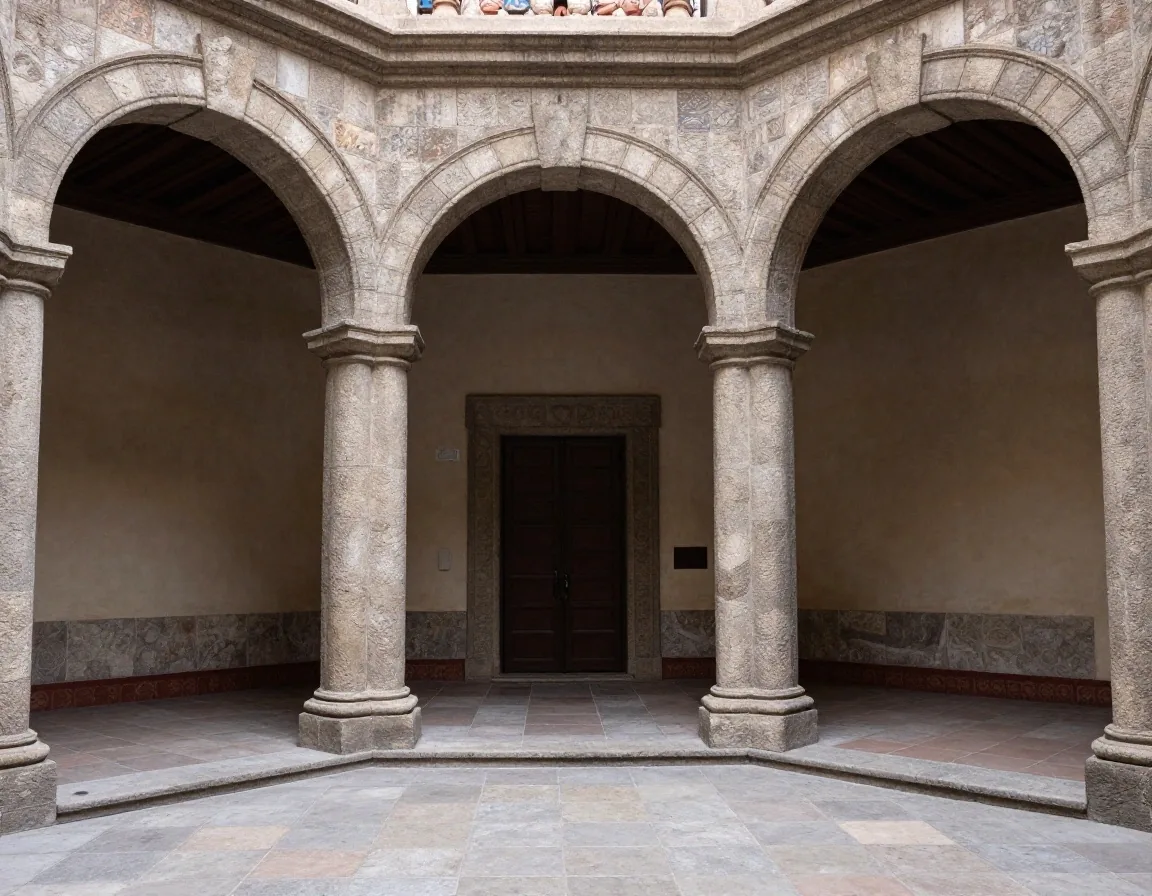
Secretariat of Public Education (SEP)
More than two hundred fresco panels by Diego Rivera, divided between the Patio of Labor (agriculture and mining) and the Patio of Festivals (popular agrarian dances and ceremonies).
National Palace and the Monumental Staircase
On the central staircase, the fresco "Epic of the Mexican People" by Diego Rivera synthesizes the country's history from the Mesoamerican horizon and the myth of Quetzalcoatl to foreign intervention and the social Revolution. On the upper corridors, you can see the panels about the Tlatelolco market and Totonac culture.
Palace of Fine Arts (Second Floor)
Direct dialogue between three giants of Mexican art: the famous "Man, Controller of the Universe" recreated by Rivera after his censorship at the Rockefeller Center in New York, "The New Democracy" by David Alfaro Siqueiros with its material drama, and the tragic vehemence of "Catharsis" painted by Orozco.
Modernism and functionalist architecture route
During the twentieth century, Mexico City experimented with models of collective housing and pure geometries stripped of historicist ornamentation. This itinerary explores the solutions that transformed the urban fabric and consecrated masters such as Juan O'Gorman, Mario Pani, and Luis Barragán.
Rivera and Kahlo House Studio
Design by Juan O'Gorman inspired by the postulates of Le Corbusier. Reinforced concrete pillars, industrial iron-frame windows, and an iconic perimeter fence of living organ pipe cacti (native succulents).
Luis Barragán House
UNESCO World Heritage. Masterful fusion between the pure volumes of rationalism and Mexican monastic introspection. Notable for the treatment of filtered light, volcanic stone walls, and bougainvillea pigments.
Nonoalco Tlatelolco Complex
Massive housing project conceived by Mario Pani that integrated 102 multi-family buildings, schools, hospitals, and the emblematic Insignia Tower, radically transforming the appearance of the capital's north.
UNAM Central Campus
Monumental composition where reinforced concrete, steel, and local basalt stone dialogue with monumental mosaics on the four blind facades of the Central Library.
Viceregal circuit of temples and cloisters
For those interested in the history of sacred art and New Hispanic ecclesiastical institutions, this tour links the cloisters that defined the spiritual life of the colonial capital. Chiluca stone, red tezontle, and baroque altarpieces bathed in gold leaf make up this conventual fabric.
Suggested excursion to Tepotzotlán
45 km north of the Center, theNational Museum of the Viceroyaltyin the former Jesuit College of San Francisco Javier houses the Chapel of San Loreto and the Virgin's dressing room, an absolute pinnacle of Churrigueresque baroque in America.
Convent of Regina Porta Coeli
Regina Street, CenterChurch of Conceptionist nuns with golden Solomonic baroque altarpieces that survived the 19th-century disentailment of ecclesiastical property, flanked by a very serene pedestrian cobblestone plaza.
Temple and Cloister of San Jerónimo
University of the CloisterPrecinct that housed Sor Juana Inés de la Cruz, the greatest lyrical figure of the New Hispanic Golden Age, for nearly three decades. It preserves the lower choir where she took her vows and the convent cell converted into an academic center.
Santa Veracruz Parish
Santa Veracruz PlazaFacing the western side of the Alameda, a Baroque church of sober gray stone and Churrigueresque facade founded by Hernán Cortés in gratitude after the fall of Tenochtitlan, linked to the most prestigious viceregal brotherhoods.
Porfirian Itinerary: marbles and boulevards
The regime of Porfirio Díaz (1876-1911) transformed the face of the capital under the influence of Haussmann's urbanism in Paris. This route reveals the opulence and contradictions of this period of cosmopolitan modernization along tree-lined roundabouts and residential neighborhoods.
Paseo de la Reforma
Originally laid out as the Empress's Promenade by Maximilian of Habsburg, consolidated at the end of the nineteenth century as the great monumental boulevard decorated with pedestals of Reform heroes and the Independence Column.
Monument to the Revolution
A colossal structure of four stone pillars that utilizes the central steel dome of what was to be the sumptuous Legislative Palace of Porfirio Díaz, conceived by the French architect Émile Bénard and completed with a revolutionary aesthetic by Carlos Obregón Santacilia.
Roma and Juárez Neighborhoods
Pedestrian walks among carved stone palaces, eclectic mansions with French mansard roofs, and Art Nouveau buildings. Highlights include Casa Lamm, Plaza Río de Janeiro, and the large houses on Londres Street.
Pedestrian circuits for Sundays
Sundays in Mexico City present very particular dynamics: Paseo de la Reforma transforms into a recreational bike path free of cars from eight in the morning to two in the afternoon, while public museums of the INAH and INBAL offer free admission to Mexican citizens and legal residents, which significantly increases attendance in galleries.
Morning strategy:Start with a walk or public bike ride on Reforma between 08:00 and 10:30, taking advantage of the vehicular silence to admire the sculptural monuments.
Selection of venues:Schedule visits during central hours to privately managed venues or independent foundations that maintain controlled capacity through paid tickets, such as the Franz Mayer Museum or the Kaluz Museum.
How to manage reservations and restricted access
Casa Luis Barragán:Reservations are released quarterly on their official platform. For visits in specific languages, they sell out weeks in advance.
Frida Kahlo's Blue House:Strictly numbered tickets for 15-minute slots purchased online. There is no ticket office for same-day sales.
National Palace:Access to the Diego Rivera murals depends on the Presidency's institutional agenda and may be suspended without official prior notice.
Adaptability to urban contingencies
The capital is a living city frequently crossed by civic demonstrations, public works on main arteries, or official events in the Plaza de la Constitución. A cultured traveler must cultivate flexibility: if the Zócalo is fenced off for a State act, it is the ideal time to redirect the walk toward the Franz Mayer Museum or the palaces on Tacuba Street. Having offline maps downloaded and a list of secondary venues of high interest ensures that any alteration to the itinerary translates into a new architectural discovery.
Alternative to Main Square
Moneda Street toward the Museum of World Cultures and the Justo Sierra Synagogue.
Alternative to Eje Central
Pedestrian transit along Donceles Street: second-hand bookstores and the City Theater.
Essential digital resource
Metro CDMX application with offline schematic map for traffic contingencies.
Frequently asked questions about itineraries and tours
Specific guidance on time optimization, pedestrian safety, and access rules in Mexico's heritage sites.
Is it recommended to tour the circuits on foot or by vehicle?
Within each quadrant (Historic Center, Coyoacán, San Ángel, or the First Section of Chapultepec), walking is not only the most enriching option but the most efficient, as vehicular traffic on narrow streets is usually gridlocked. To travel between distant quadrants, it is advised to use the Metrobús system (Line 1 or Line 7) or private transport services via app outside of peak hours.
How many major museums or monuments should one schedule in a single day?
We advise a limit of two major venues per day (for example, the Anthropology Museum in the morning and Chapultepec Castle in the afternoon), complemented by breaks in colonial courtyards, temples, or historic cafes. Attempting to visit three or four art galleries in a single day usually leads to perceptual saturation and severe physical fatigue due to the scale of the buildings.
What precautions should be considered regarding the altitude of Mexico City?
The capital is located more than 2,240 meters above sea level. During the first twenty-four hours, it is common to experience slight fatigue when climbing stairs or steep slopes (such as the ramp to Chapultepec Castle or the bases of Teotihuacán). Maintain constant hydration, avoid heavy meals at the first lunch, and walk at a steady pace.
Is it safe to photograph murals and architectural details in the Historic Center?
Inside museums and government buildings (San Ildefonso, Bellas Artes, MUNAL, SEP), taking photographs without flash for non-commercial purposes is permitted safely. On public streets in the Historic Center and commercial walkways, maintain discreet behavior with your equipment and keep professional cameras in closed backpacks when walking through high-density pedestrian perimeters.
Plan your heritage immersion with rigor
Our cultural analysts and writers assist educational institutions, independent travelers, and study groups in structuring coherent thematic calendars in the Valley of Mexico.
The Tourist Insight · Av. Paseo de la Reforma 50, Col. Juárez, Cuauhtémoc, Mexico City
Research assistance: Monday to Friday from 09:00 to 18:00