
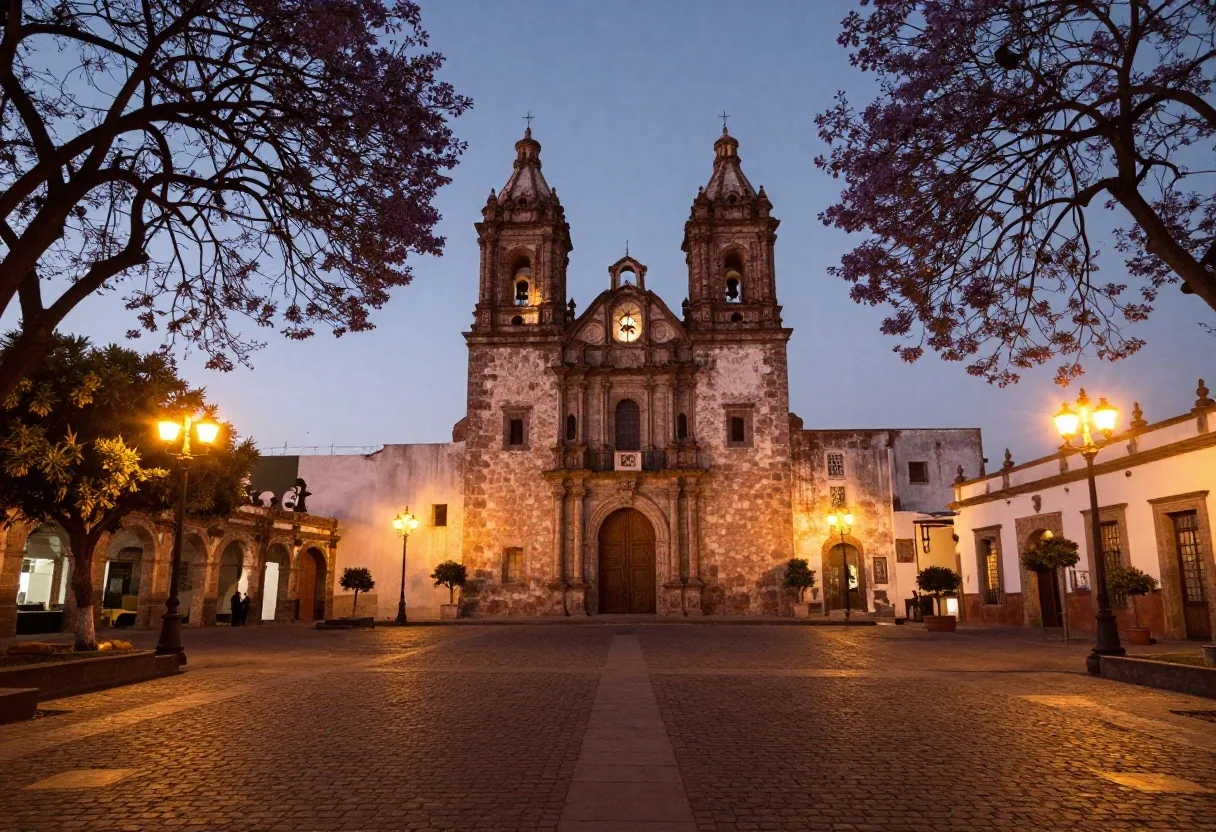
Coyoacán and San Ángel in southern memory
In the south of Mexico City, Coyoacán and San Ángel represent two fundamental enclaves where viceregal architecture, conventual urbanism, and twentieth-century artistic movements intertwine harmoniously. Former independent riverside villages settled on volcanic rocky terrain and fruit orchards, both neighborhoods preserve their winding layout, human-scale plazas, and ashlar walls tinted in ochre and indigo blue.
Coyoacán: from Tepanec lordship to viceregal captaincy
Before the arrival of the Hispanic troops, Coyoacán—whose Nahuatl term alludes to the place of coyotes—functioned as a relevant Tepanec tributary lordship subordinate to Azcapotzalco. After the fall of Mexico-Tenochtitlan in August 1521, Hernán Cortés chose these fertile riverside lands to establish the Royal Captaincy General, erecting the first New Spanish council while the rubble of the Mexica capital was cleared and rebuilt over the central lake bed.
From this foundational plaza, the first territorial land grants (encomiendas) were ordered, and plots were granted to mendicant religious orders to undertake the evangelization of the lake basin. The visitor who walks through its pedestrian corners today experiences that calm scale: solid blind convent walls, sabino wood gates with hand-forged ironwork, and interior orchards that preserve centennial walnut and orange trees sheltered from the urban bustle.
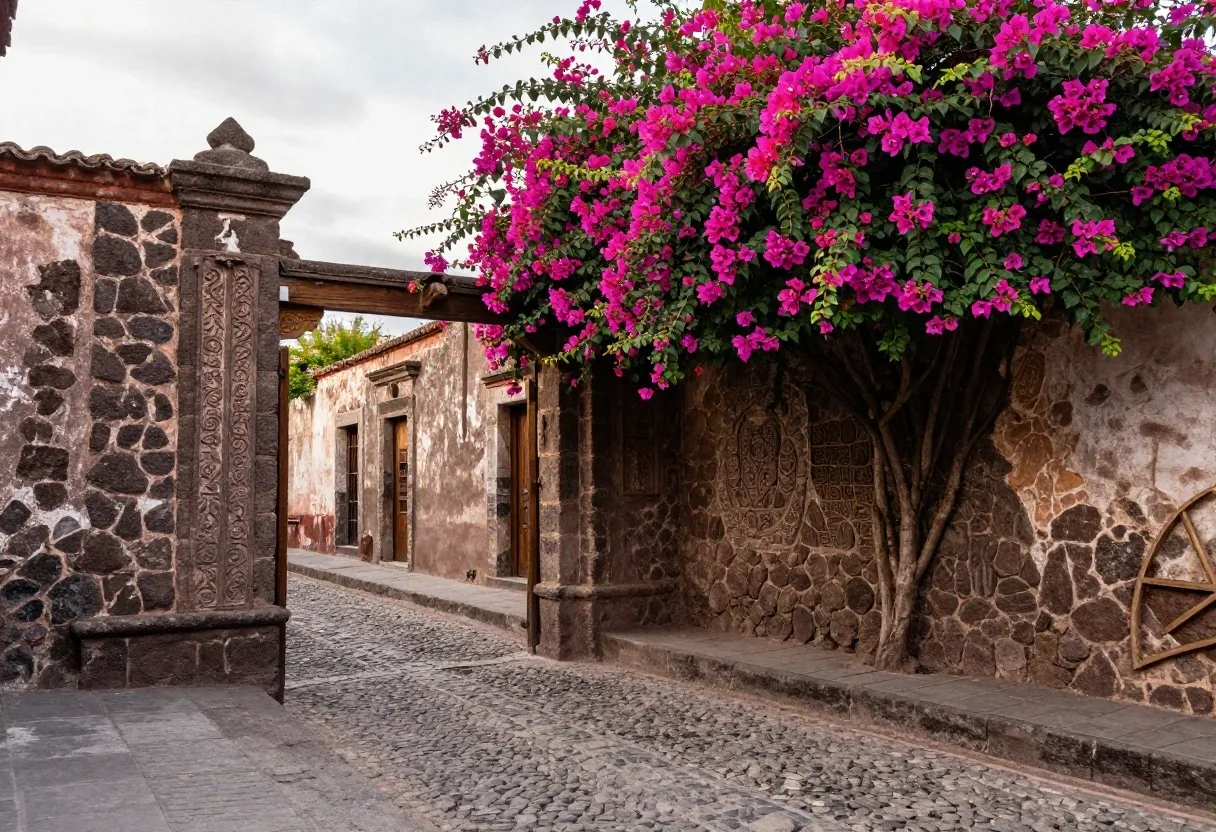
Convent orchards and volcanic ashlar
Unlike the orthogonal grid of the foundational center, Coyoacán preserved the curved paths of the pre-Hispanic riverside causeways. The manor estates combined black basalt masonry extracted from the Pedregal with slaked lime mortars, achieving thermal resistance that still keeps interiors cool during the high-altitude noons.
The Parish and former convent of San Juan Bautista
Explore the heritage landmarks that articulate the Franciscan and Dominican spirituality of the sixteenth century alongside the bohemian refuges that redefined post-revolutionary Mexican art.
Franciscan and Dominican Complex
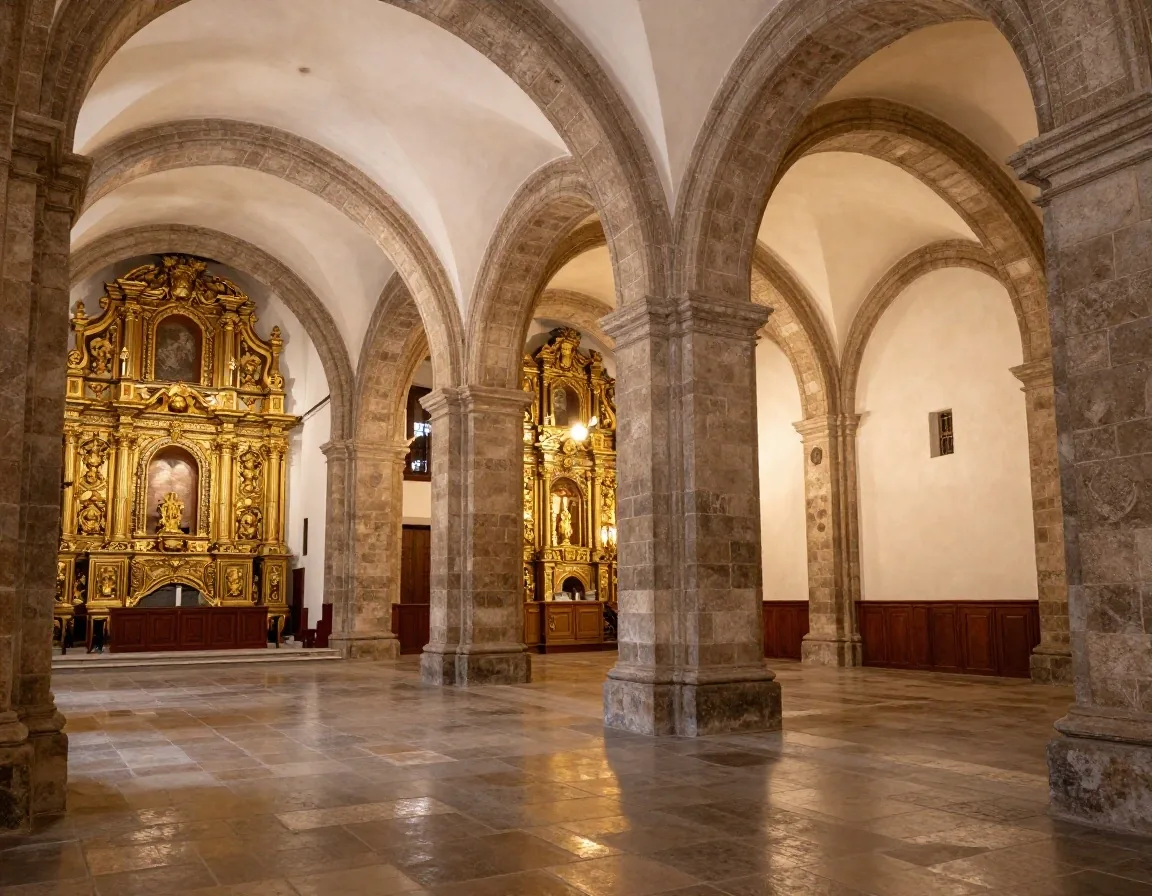
Dominating the Jardín Hidalgo is the San Juan Bautista complex, one of the oldest conventual complexes in the Valley of Mexico, initially erected by the Franciscans and continued by Dominican friars starting in 1552. Its classicist volcanic stone facade gives way to a monumental nave with a wooden coffered ceiling and gilded baroque altarpieces of fine viceregal craftsmanship.
The attached cloister preserves fragments of fresco mural painting with scenes of founding saints and a courtyard of centennial orange trees that illustrates the model of agrarian evangelization promoted during the first New Spanish century.
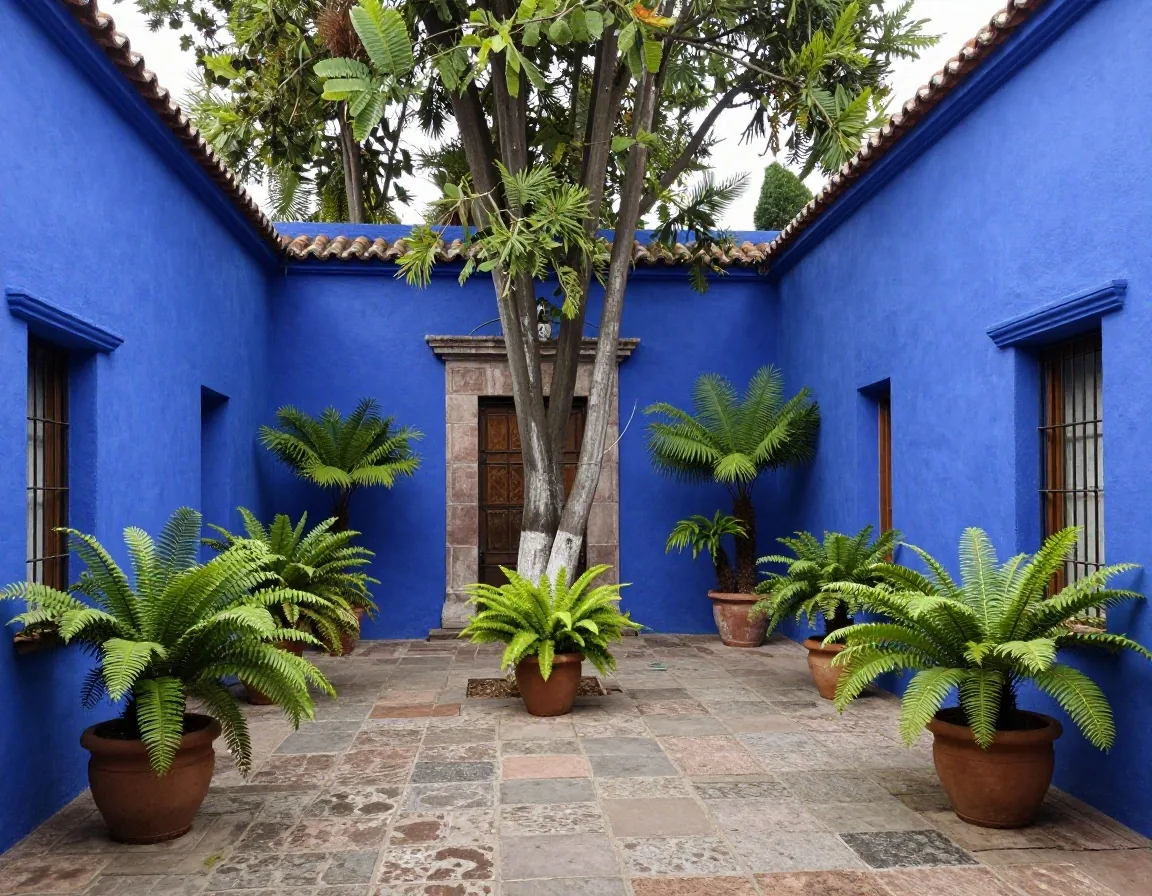
The Blue House: creative universe of Frida Kahlo
At the corner of Londres and Allende streets is the Blue House, the family residence where the painter Frida Kahlo (1907-1954) was born, lived, and died. Converted into a museum in 1958 thanks to the testamentary will of Diego Rivera, the mansion preserves the artist's original domestic environment: her wooden easel adapted to her wheelchair, her collection of popular ex-votos, and her traditional Tehuantepec and Zapotec dresses.
Touring its rooms allows one to decipher the close relationship between Kahlo's physical convalescence, her passion for pre-Hispanic roots, and her artistic production of universal repercussion.
The Leon Trotsky House Museum and political asylum
A few blocks from the Blue House, on Río Churubusco Avenue, is the Leon Trotsky House Museum. This property, fortified with guard booths and thickened walls, gave asylum to the Bolshevik leader and Russian revolutionary after his expulsion from the Soviet Union and his arrival in Mexico in 1937, thanks to Diego Rivera's efforts with President Lázaro Cárdenas.
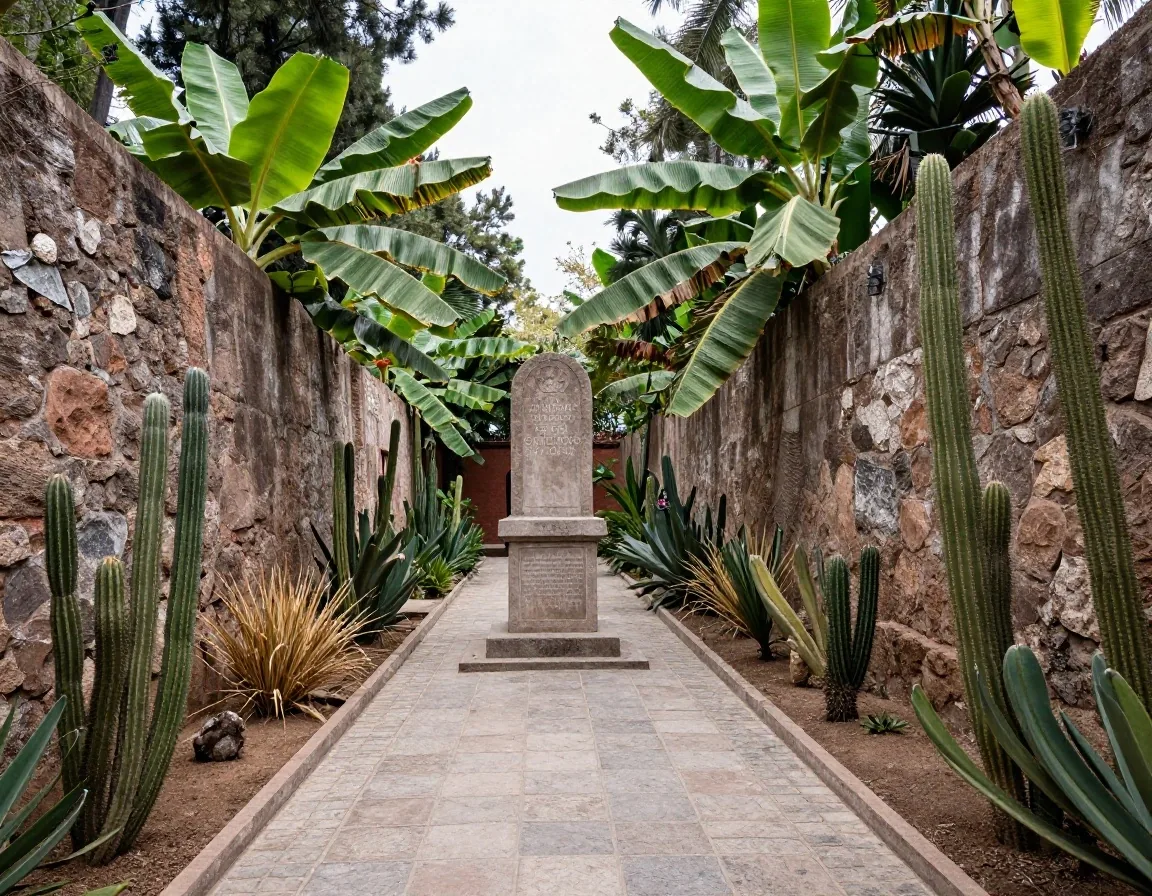
The house preserves Trotsky's work library, his typewriter, his collection of period newspapers, and the garden where he grew cacti. In the central courtyard rests the granite funerary stele designed by Juan O'Gorman that guards his ashes.
Santa Catarina and the Callejón del Aguacate
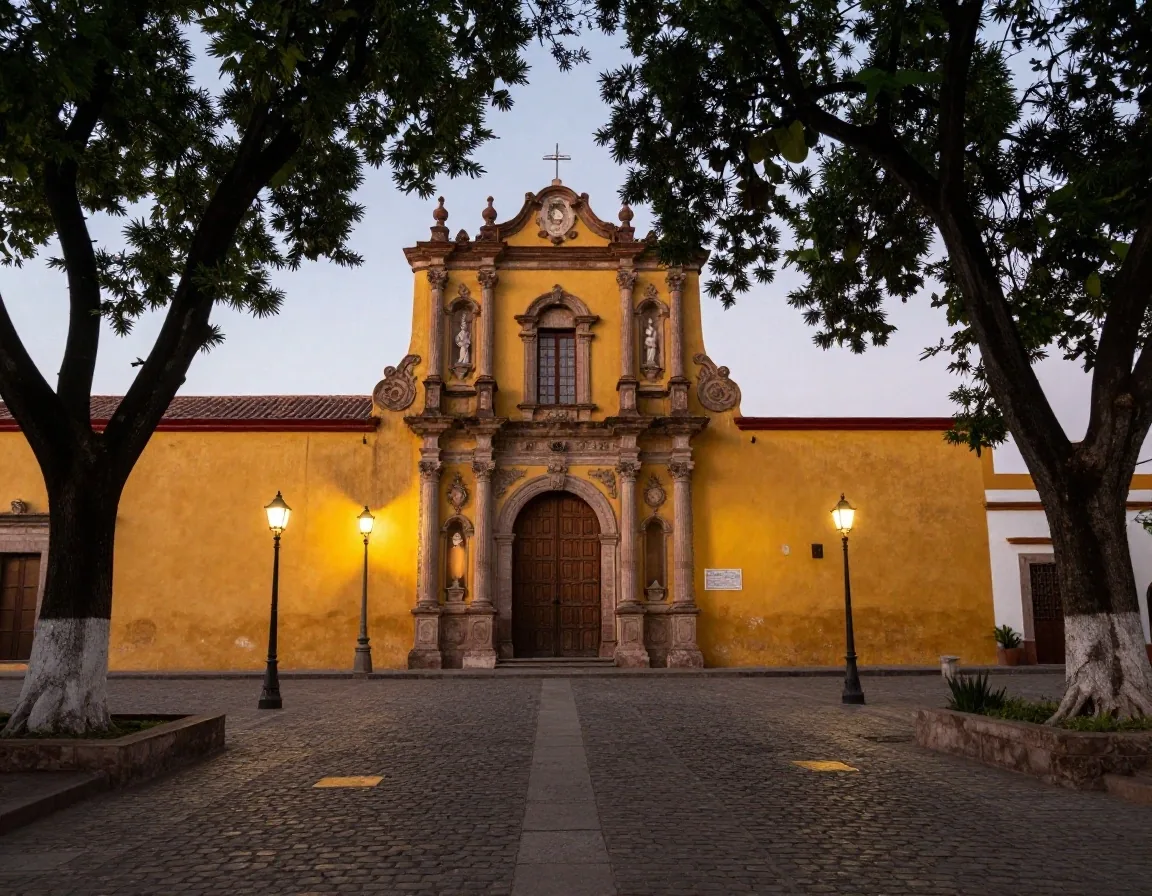
The Paseo de la Fonoteca Nacional and the Santa Catarina plaza preserve the most intact urban scale of colonial Coyoacán. The Santa Catarina chapel, built in the seventeenth century with a popular baroque facade in almagre tones, originally functioned as a segregated Indian temple during the first decades of the viceregal regime.
Very close by, the Callejón del Aguacate preserves oral legends passed down by generations of local chroniclers, guarded by a niche with an image of the Virgin and flanked by high walls covered in vines and bougainvillea. This pedestrian stretch invites you to walk without haste to contemplate the manor-style volume and the calm of its night lighting.
San Ángel and the El Carmen Convent
To the west of Coyoacán, crossing the Magdalena River—the only living open-air riverbed that still survives in the urban valley—you arrive at the historic village of San Ángel. Its central monument is the Museo del Carmen, an ancient monastery of the Discalced Carmelites built between 1615 and 1626 by Friar Andrés de San Miguel.
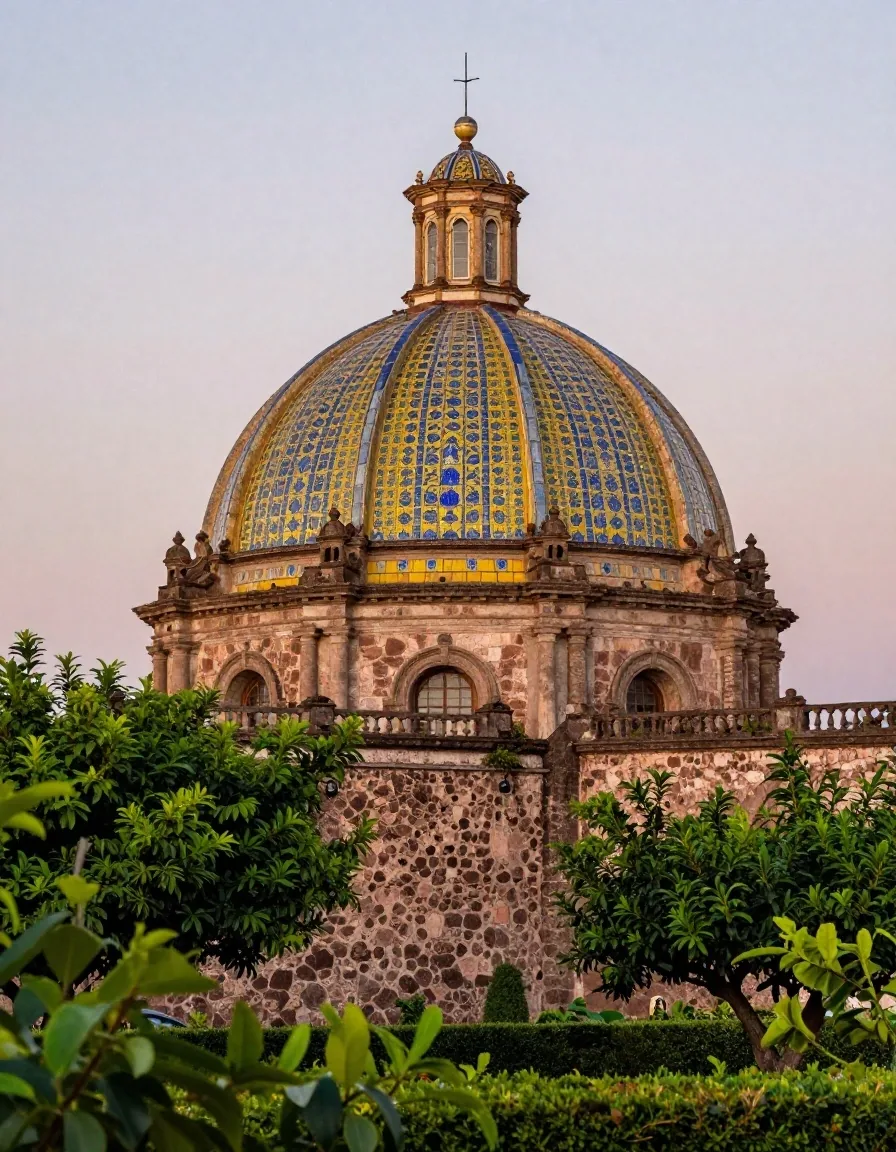
Three domes covered with polychrome Puebla tiles and underground crypts naturally ventilated by the porosity of the basalt.
The Museo del Carmen and its convent cisterns
The former Carmelite monastery stands out on the southern horizon for its silhouette of three talavera domes polychromed in shades of yellow and blue. Inside, the historic orchard preserves masonry cisterns designed to harness the runoff from the Magdalena River.
Beneath the main nave lie the vaulted underground crypts, famous for housing naturally mummified bodies. The particular climatic conditions of the volcanic subsoil, added to the salinity of the stony strata and the constant circulation of cold air currents, prevented organic decomposition during the seventeenth and eighteenth centuries.
Ultra-baroque fountain of the Casa del Risco
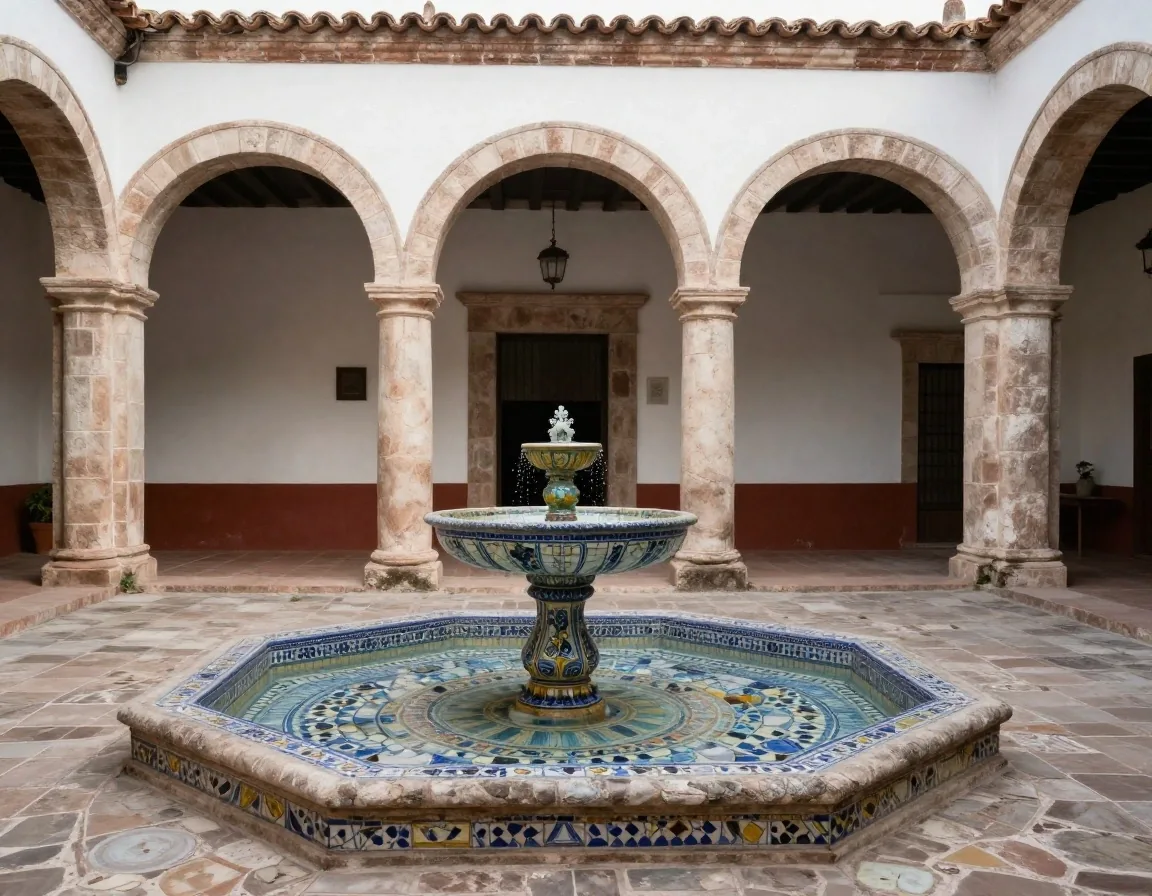
Ornamental monument composed of intact pieces and fragments of porcelain from the Nao de China, Puebla earthenware, and oriental mirrors.
Plaza San Jacinto and the Bazar del Sábado
The social center of San Ángel gravitates around Plaza San Jacinto, bordered by ancient ash trees and stately mansions like the grand Casa del Risco, which guards an extraordinary baroque fountain assembled with Chinese porcelain brought by the Nao de Filipinas and Puebla Talavera ceramics.
Every Saturday, the plaza and the interior courtyards of the manor houses host the famous Bazar del Sábado. Here, popular artisans and sculptors exhibit high-temperature ceramics, Taxco silver jewelry, hand-embroidered textiles from Oaxaca, and contemporary paintings, forming one of the most prestigious forums for fine crafts and popular art in the capital.
From 10:00 to 19:00 hours in the plaza and adjacent mansions.
Fine silver, backstrap looms, Olinalá lacquers, and burnished ceramics.
The Casa Estudio Diego Rivera y Frida Kahlo
The radical functionalism of Juan O'Gorman and the plastic integration over the lava of the Xitle volcano revolutionized the southern metropolitan horizon during the twentieth century.
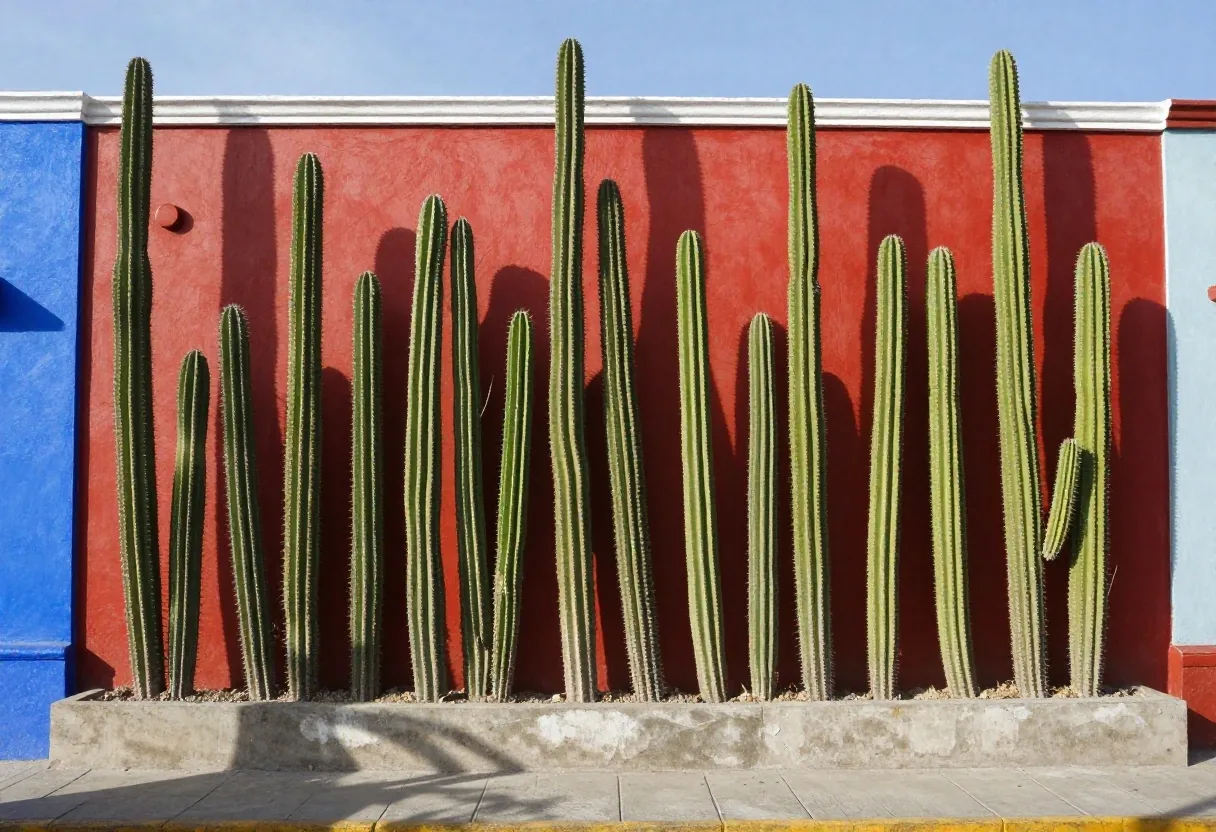
Concrete stilts and organ pipe cactus fence
In the San Ángel Inn neighborhood, at the intersection of Palmas and Altavista streets, stand the twin houses designed in 1931 by the architect and muralist Juan O'Gorman. Considered one of the first functionalist architectural manifestations in Latin America, these two workshop-homes joined by a slender aerial concrete bridge embody Le Corbusier's postulates: reinforced concrete stilts, floor-to-ceiling windows, exposed electrical installations, and a perimeter fence made entirely of living organ pipe cacti.
Here Diego Rivera painted much of his easel work and housed his vast collection of popular papier-mâché Judas figures and monumental skulls.
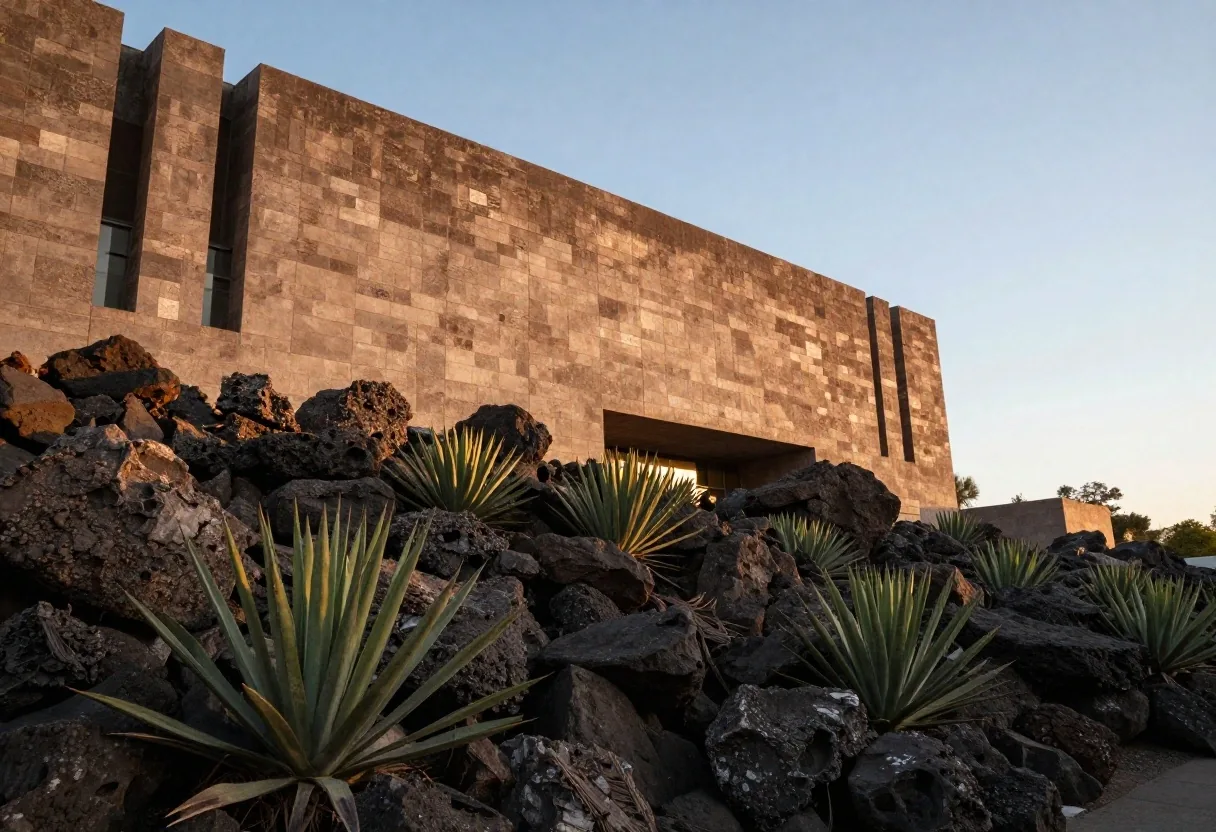
The Pedregal de San Ángel and Ciudad Universitaria
The physical landscape of the south of the city was radically transformed by the eruption of the Xitle volcano that occurred approximately two thousand years ago, covering tens of square kilometers with rough basaltic lava. In this rugged environment, the Jardines del Pedregal subdivision, designed by Luis Barragán, flourished in the 1950s, integrating xerophytic gardens with black lava walls.
A short distance away unfolds the central campus of the National Autonomous University of Mexico (UNAM), where Mario Pani and Enrique del Moral articulated massive esplanades and volcanic stone slopes complemented by Juan O'Gorman's stone mosaic murals at the Central Library.
Logistical recommendations for the visitor
Touring Coyoacán and San Ángel in a single day is extremely enriching if planned in chronological and geographical order. Below are the key guidelines for transport, ticketing, and stay times.
Bazar and Museo del Carmen
It is advisable to start early (09:30–10:00) at the Museo del Carmen to tour the cloisters and vaulted crypts before the crowds increase. Around 11:30, walk toward Plaza San Jacinto to appreciate the opening of the workshops of the Bazar del Sábado and the Casa del Risco.
Connection via Miguel Ángel de Quevedo
To connect both traditional neighborhoods, take a taxi or transport along the Avenida Miguel Ángel de Quevedo or Francisco Sosa corridor. The latter avenue is the old viceregal royal road flanked by cypresses and red-ochre stone mansions, ideal for a leisurely 40-minute walk.
Casa Azul and Central Plazas
Book your slot for the Museo Frida Kahlo weeks in advance exclusively online. After the visit, walk through Jardín Hidalgo, the former convent of San Juan Bautista, and end the day with a traditional coffee near the Callejón del Aguacate.
Frequently asked questions about visiting the colonial south
Essential operational details to tour the historic sites without setbacks.
Is it essential to book tickets in advance for the Museo Frida Kahlo?
Yes, it is absolutely mandatory. The Museo Frida Kahlo (Casa Azul) does not have ticket sales at a physical box office. All access is issued with a designated date and time slot through its official website, and during weekends and high seasons, they usually sell out two to three weeks before the chosen date.
What is the best day of the week to tour San Ángel?
Saturday is par excellence the most representative day thanks to the Bazar del Sábado in Plaza San Jacinto and the opening of the traditional art mansions. However, if you are looking for tranquility to photograph the architecture of the alleys and enjoy the monastic silence of the Museo del Carmen, Wednesdays and Thursdays offer a much more serene experience.
How to move comfortably between Coyoacán and San Ángel?
Both neighborhoods are separated by about 3.5 kilometers. The most pleasant alternative for pedestrians is to walk along Avenida Francisco Sosa, lined with viceregal architectural landmarks such as the Casa Alvarado and the Capilla de San Antonio Panzacola. By private vehicle or ride-hailing taxi, the journey takes between 10 and 15 minutes depending on traffic on Avenida Miguel Ángel de Quevedo.
Can you visit the Twin Houses of Juan O'Gorman on the same day?
Of course. The Museo Casa Estudio Diego Rivera y Frida Kahlo is located in the San Ángel Inn area, a mere 15-minute walk west of Plaza San Jacinto. It is a perfect stop just before or after lunch in the surroundings of the historic San Ángel hacienda.
Delve into the cultural legacy of the Valley of Mexico
Consult our monographs dedicated to the viceregal Historic Center, the Bosque de Chapultepec reserves, and the pre-Hispanic canals of Xochimilco to complement your understanding of the metropolitan territory.