Metropolitan Cathedral
A monument of colossal scale that fuses the severe Herrerian style with the Churrigueresque altarpiece of the Altar of the Kings. Its chiluca stone towers dominate the northern flank of the Plaza de la Constitución.
The Tourist Insight offers a documented reading on the history, architecture, and artistic expressions that define Mexico City and its heritage surroundings. A rigorous editorial expedition through the geological, pre-Hispanic, viceregal, and contemporary layers of the central highlands.
Walking through Mexico City requires recognizing that the current city rests materially on the dried bed of Lake Texcoco and the structures of Tenochtitlan. This lacustrine condition determines both the contemporary challenges of foundation and the spatial distribution of its monuments.
Far from being a homogeneous surface, the metropolitan soil preserves fragments of pre-Hispanic causeways, viceregal irrigation ditches turned into avenues, and palpable geological slopes. While walking the streets of perimeter A, the visitor observes how baroque palaces made of tezontle and chiluca stone dialogue with Mexica walls exposed in underground archaeological windows. Understanding this subsoil allows one to appreciate the unique character of its urban layout and the constant technical adaptation that its conservation has demanded over five centuries.
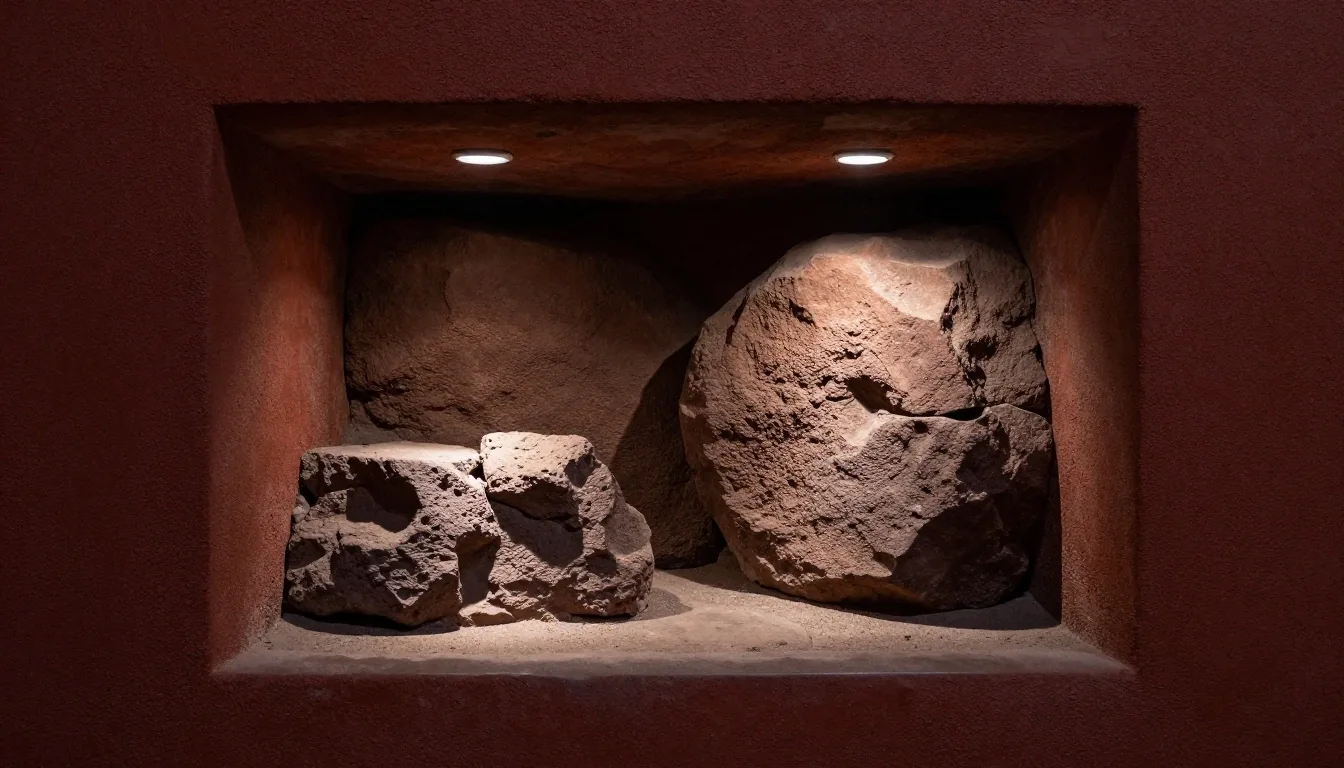
Superposition of volcanic tezontle over Mexica foundations in the Historic Center.
The metropolitan Zócalo condenses the nerve centers of political and spiritual power from the fourteenth century to the present. The Metropolitan Cathedral, built in successive phases between 1573 and 1813, illustrates the stylistic transition from late Gothic and Herrerian to New Spanish Baroque and the enlightened Neoclassicism of Manuel Tolsá.
A monument of colossal scale that fuses the severe Herrerian style with the Churrigueresque altarpiece of the Altar of the Kings. Its chiluca stone towers dominate the northern flank of the Plaza de la Constitución.
A few meters to the northeast, the ceremonial center consecrated to Huitzilopochtli and Tláloc testifies to seven superimposed stages of construction and an on-site museum with vestiges of polychrome votive offerings.
Between both poles, stately mansions preserve arched courtyards, zoomorphic gargoyles, and reddish tezontle walls. The current Museum of the City of Mexico preserves the original studio of painter Joaquín Clausell.
Modern Museography
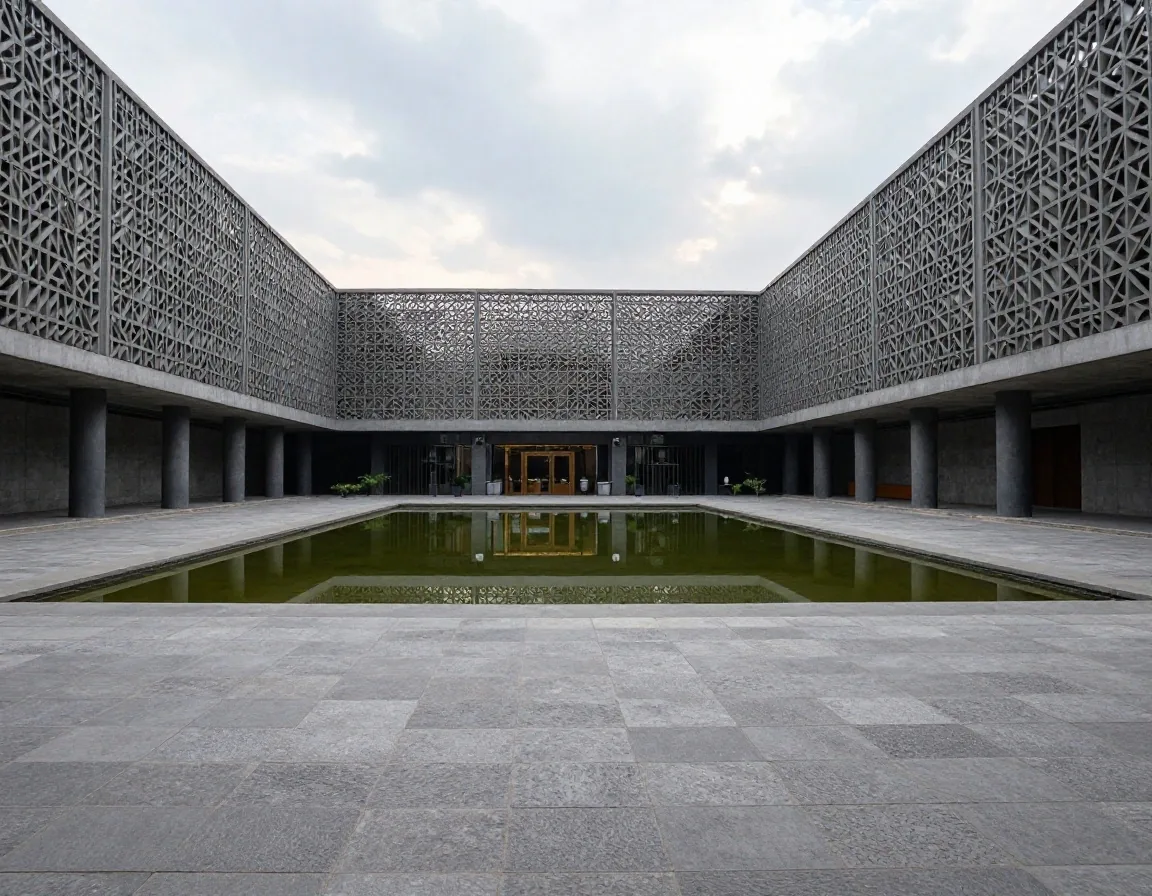
Chapultepec Forest constitutes the main environmental lung and the largest center of museum concentration in the country. In its first section is the National Museum of Anthropology, designed by Pedro Ramírez Vázquez in 1964, whose museography articulates the original cultures of Mesoamerica through a central courtyard with aluminum lattices and the iconic inverted umbrella.
On the Chapulín hill, Chapultepec Castle safeguards the memory of the viceroyalty, the ephemeral Second Empire of Maximilian of Habsburg, and the Porfirian period in the National Museum of History. The proximity to the Museum of Modern Art and the Tamayo Museum adds a critical perspective on the plastic arts of the twentieth century. This corridor allows one to contrast in a single day the pre-Hispanic worldview with the aesthetic discussions of modernity.
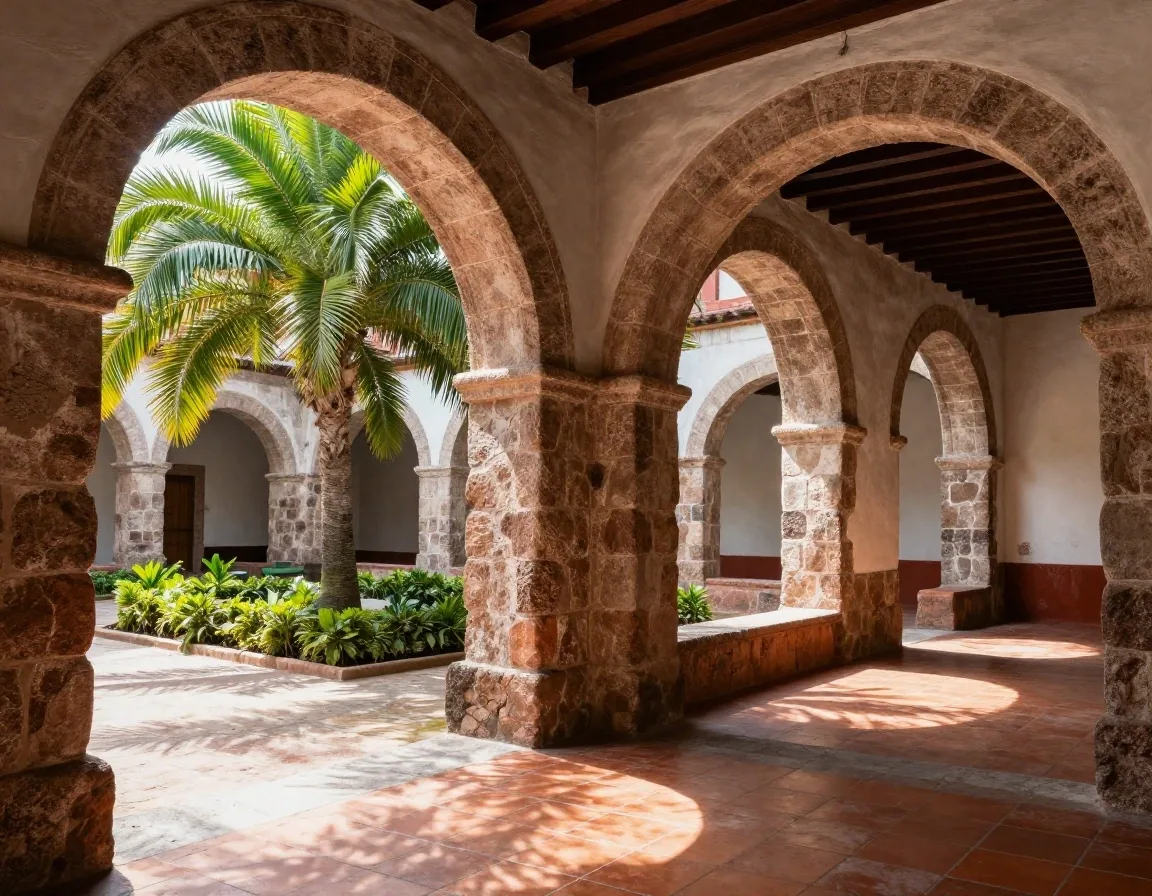
Toward the south of the central valley, ancient riverside towns absorbed by the urban sprawl preserve their conventual atmosphere and cobblestone squares. Coyoacán, the temporary seat of Hernán Cortés' government after the fall of the Mexica, stands out for the Parish of San Juan Bautista and its sixteenth-century Dominican cloister.
San Ángel complements this panorama with the College of San Jacinto and the Carmen Convent, famous for its mummified crypts and historical orchards turned into public spaces. These neighborhoods later housed key figures of muralism and Ibero-American literature, becoming creative workshops where the built heritage shelters site museums, folk art bazaars, and community botanical gardens.
16th-century convents and vernacular basalt architecture.
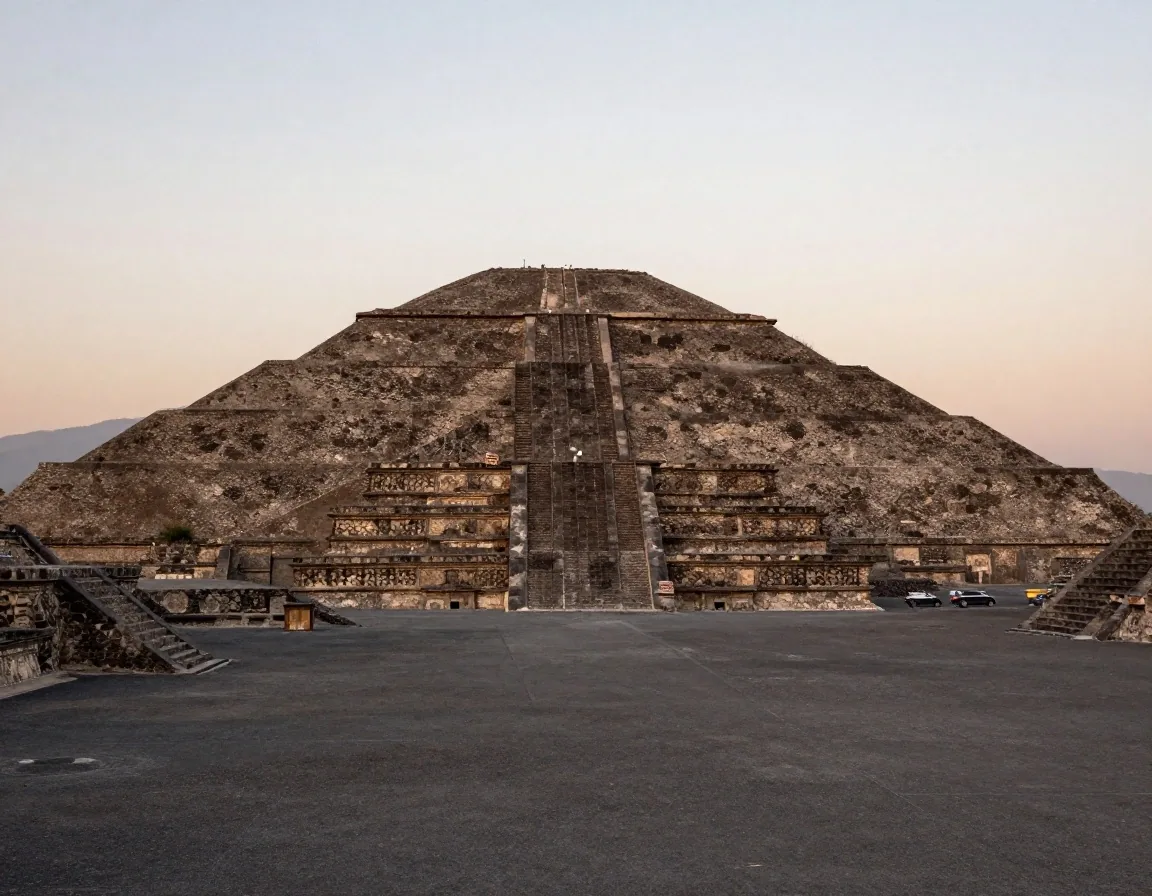
Fifty kilometers northeast of the metropolitan core, the Teotihuacán archaeological zone exemplifies the monumentality of Mesoamerican urban planning between the first and seventh centuries of our era. The Avenue of the Dead articulates a rectilinear axis flanked by the Pyramid of the Sun, the Pyramid of the Moon, and the Citadel complex with the Temple of the Feathered Serpent.
Its astronomical layout and drainage network demonstrate an exhaustive topographical knowledge of the San Juan river valley. Analyzing Teotihuacán as a regional hub allows one to link its material influence with later developments in Tula, Cholula, and the lacustrine valley of Mexico itself, enriching visitors' vision of Mesoamerican cultural horizons.
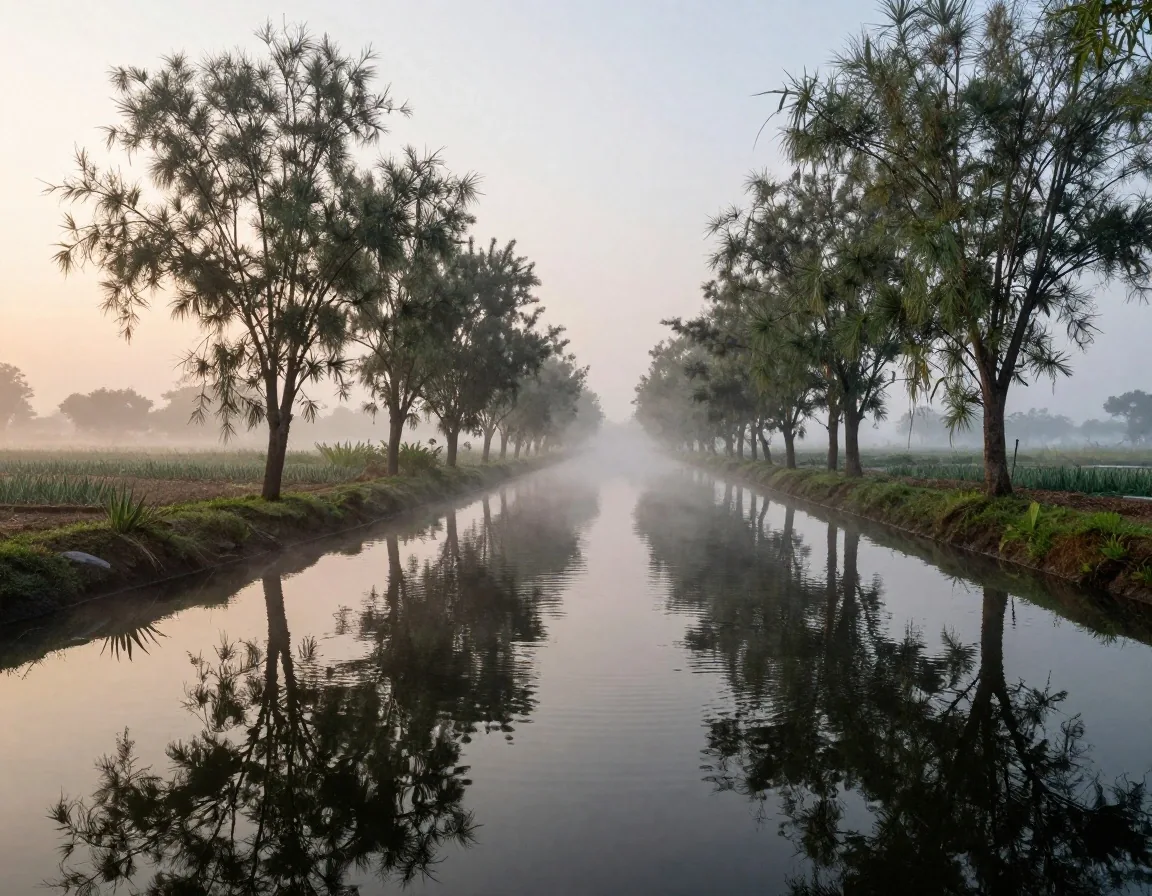
Xochimilco wetlands and chinampa cultivation system.
The chinampa agricultural system represents one of the most sustainable hydrological engineering works created by Mesoamerican civilization. In Xochimilco and Tláhuac, the current canals correspond to the last remnants of the freshwater lake system fed by the springs of the Ajusco-Chichinauhtzin mountain range.
The technique of fixing artificial islets with ahuejote roots allowed for multiple annual harvests of vegetables and flowers, supplying the capital since pre-Hispanic times. In addition to its contemporary festive interest, this environment constitutes a protected cultural landscape that safeguards endemic biological species, such as the axolotl (Ambystoma mexicanum), and centuries-old community water management institutions.
Mexico City functioned as a laboratory for Latin American sociopolitical vanguards after the 1910 Revolution. The walls of the Secretariat of Public Education, the Palace of Fine Arts, and the Antiguo Colegio de San Ildefonso preserve frescoes by Diego Rivera, José Clemente Orozco, and David Alfaro Siqueiros that reinterpreted the nation's historical identity.
Along with muralism, architecture adopted functionalist principles adapted to local materials, the pinnacle of which is observed in the central campus of the University City, inaugurated in 1952 and inscribed on the World Heritage list. Volcanic stone walls, clay lattices, and monumental mosaics integrate art and constructive function in a continental-scale dialogue.
Transition from the exterior art nouveau conceived by Adamo Boari to the interior art deco with marble reliefs and major murals by Rivera, Orozco, and Camarena.
The Central Library with the mural by Juan O'Gorman and the rectory synthesize the use of native volcanic basalt with collective-scale plastic arts.
The Diego Rivera and Frida Kahlo Studio House and the Luis Barragán House demonstrate how functionalist austerity was transformed into intimate world heritage.
Designing a reflective tour through a city of twenty million inhabitants requires balancing geographic distances and conceptual loads. The Tourist Insight organizes suggestions divided by metropolitan quadrants and research affinities:
Templo Mayor, Metropolitan Cathedral, and National Palace. Focus on viceregal stratigraphy and the government buildings of the first square.
O'Gorman's twin houses in San Ángel, Luis Barragán House in Tacubaya, and the central campus of University City.
Cuemanco Pier, Xochimilco ecological zone, and historic nurseries of Coyoacán. Observation of the chinampero landscape.
Dolores Olmedo Museum, Palacio de Bellas Artes, and National Museum of San Carlos. New Spanish and 20th-century pictorial masterpieces.
Mexico's historical heritage is governed by federal regulations supervised primarily by the National Institute of Anthropology and History (INAH) and the National Institute of Fine Arts and Literature (INBAL).
The INAH guards archaeological and historical monuments erected up to the nineteenth century, while the INBAL catalogs and protects works with outstanding artistic value produced since 1900. Knowing this legal framework helps the visitor understand why certain venues limit artificial lighting, restrict the use of tripods, or impose maximum capacity limits in fragile areas. Respecting these measures guarantees the material transmission of murals, stuccos, and choir stalls to future generations.
Archaeological supervision in protected zones, capacity control in closed chambers, and preservation of original stonework.
Cataloging of public muralism, buildings with relevant aesthetic value, and conservation protocols in museum venues.
For those seeking to delve deeper beyond in-person observation, the capital has historical archives with free public access. The General Archive of the Nation, located in the former Lecumberri panopticon, guards viceregal royal decrees, revolutionary proclamations, and cartographic maps of the extinct lakes.
The National Library of Mexico in University City and the Library of Mexico in La Ciudadela offer newspaper collections essential for reconstructing daily life in the New Spanish and nineteenth-century eras. Consulting these repositories grants analytical density to any prolonged stay in the country.
Viceregal royal decrees, inquisitorial funds, and handwritten cartography of the hydrological basin.
Reserved Collection housing New Spanish incunabula, convent chronicles, and the national newspaper archive.
Former tobacco factory intervened with personal libraries of prominent Mexican polymaths and chroniclers.
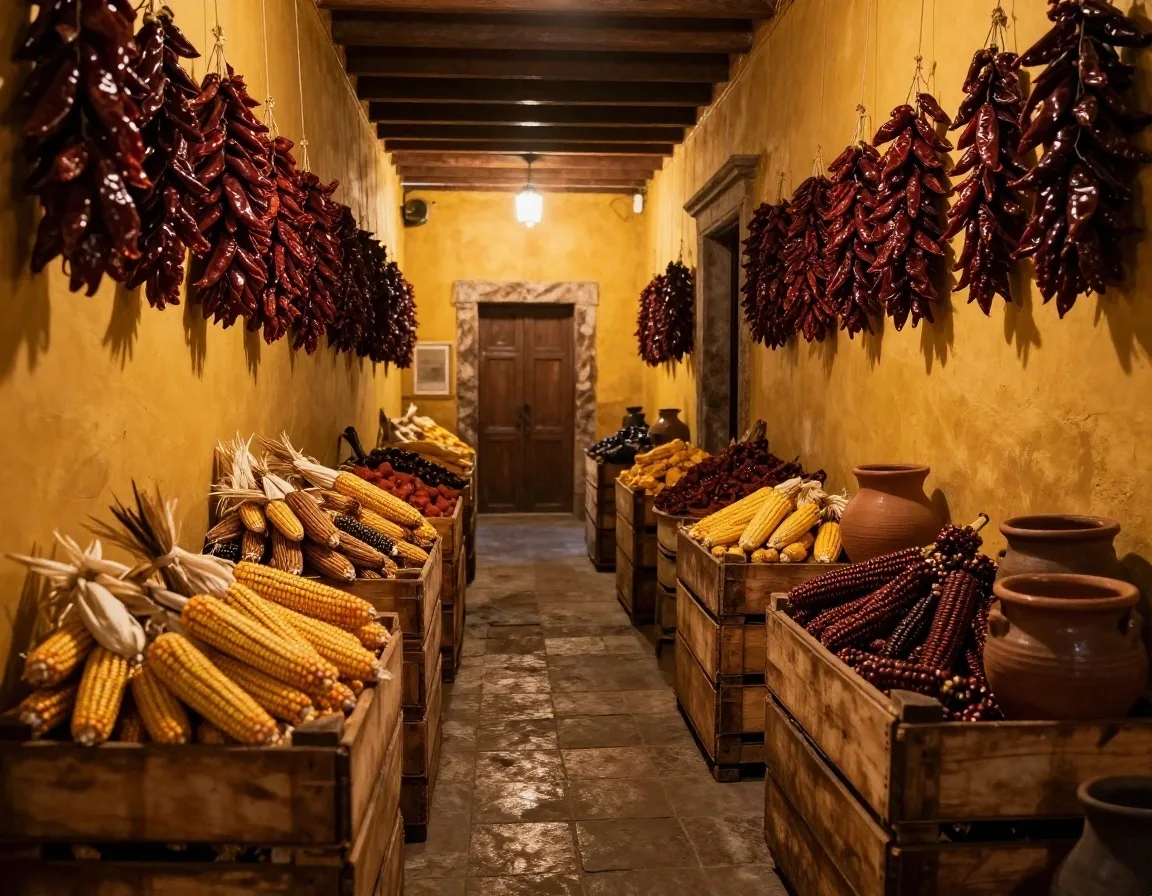
Mexican cuisine, inscribed by UNESCO on the Intangible Cultural Heritage list, has a pan-regional confluence scenario in the capital. Historic markets such as San Juan Pugibet, Medellín in the Roma neighborhood, or La Merced bring together ingredients from all bioclimatic zones of the national territory.
From quelites, heirloom corn, and dried chiles to complex mole and pipián preparations, the urban table reflects continuous processes of botanical and culinary mestizaje. Understanding the popular supply market as a space for ethnographic exchange enriches the cultural visit as much as a fine arts museum.
The central highlands present two markedly differentiated seasons: the dry season, from November to April, and the rainy season, from May to October. During winter, mornings are usually cool and clear, which favors photography of east-facing viceregal facades and early tours of outdoor sites like Teotihuacán.
In the summer months, afternoon downpours suggest scheduling morning visits to open venues and reserving the hours after 3:00 PM for galleries and covered libraries. Planning the agenda taking these climatic cycles into account minimizes mobility setbacks and thermal fatigue.
Ideal morning hours for observing quarry relief and expeditions to archaeological zones of the highlands. Cool temperatures at dawn (6°C to 12°C) that rise towards noon. Greater light stability for photographic recording.
Mornings remain mild and suitable for botanical gardens and chinampas. It is advisable to schedule visits to closed venues (National Museum of Anthropology, Bellas Artes, temples, and newspaper archives) starting at 15:00 hours to avoid traffic congestion.
The public transport network of Mexico City allows you to connect almost all heritage nodes without necessarily resorting to private automotive transport. The Metro Collective Transport System and the Metrobús lines regularly cover the Centro, Reforma, Chapultepec, and Insurgentes Sur corridors using a single rechargeable card (Integrated Mobility).
Complementarily, public bicycle systems facilitate short trips between neighborhoods such as Cuauhtémoc, Juárez, Condesa, and Roma, where the Porfirian and Art Deco architecture merits a leisurely pace of observation. Using public transport also offers an invaluable sociological window into contemporary urban life.
Line 2 (Blue) connects directly to the Zócalo and Bellas Artes. Line 7 runs through the museum corridor of Chapultepec and Polanco.
Double-decker buses along Paseo de la Reforma, from the Historic Center to the Auditorio Nacional in Chapultepec.
Confined bike lanes on Reforma and central perimeter neighborhoods, optimal for admiring Porfiriato-era mansions.
Unified access to Metro, Metrobús, Light Rail, and Cablebús available for top-ups at all stations in the network.
Practical criteria for planning documented tours of national monuments and collections.
At The Tourist Insight, we distance ourselves from impersonal lists and superficial tourist haste. Our editorial team cross-references archaeological monographs, architectural restoration reports, and testimonies from urban chroniclers to write precise, contextualized guides free of commercial sensationalism.
Our purpose lies in providing rigorous interpretive tools so that each reader can trace a conscious dialogue with the past and present of the Mexican territory.
Send your questions about itineraries, academic inquiries, or heritage cataloging suggestions.
Monographic guides and archaeological studies classified by metropolitan area.