
PRACTICAL GUIDE AND CULTURAL LOGISTICS
Frequently asked questions about heritage visits in Mexico
In this section, we resolve technical, operational, and logistical questions that travelers planning cultural tours through Mexico City and its surrounding pre-Hispanic sites often have. The information collected here is updated according to the guidelines of the governing bodies of national heritage (INAH and INBAL), offering clarity on rates, accessibility, health restrictions, and practical recommendations.
SCHEDULE AND OFFICIAL ACCESS
Closing days and institutional opening hours
The vast majority of national museums, public galleries, and archaeological sites under the custody of the federal government or the city government remain closed on Mondays. The regular operating hours for almost all museum spaces run from Tuesday to Sunday, opening between nine and ten in the morning and closing ticket offices between four-thirty and five in the afternoon. Open-air archaeological zones like Teotihuacán are open three hundred and sixty-five days a year from eight in the morning to five in the afternoon. It is advisable to schedule visits first thing in the morning to avoid hall saturation and lines at security checkpoints.
FISCAL REGIME AND ENTRANCE FEES
Free admission and rate policies for visitors
By federal law, on Sundays, admission is completely free to INAH and INBAL museums and archaeological sites exclusively for Mexican citizens and foreigners who have temporary or permanent residence in the country, accredited with an official document. Non-resident foreign visitors must pay the general rate established for their category on any day of the week. Children under thirteen, Mexican senior citizens with an INAPAM card, people with disabilities, and students or teachers with a valid school ID issued in Mexico are exempt from payment in almost all federal venues.
Stipulated Free Access
Applies on Sundays only to Mexican citizens and legal residents with formal immigration documents. Requires presenting official identification at physical ticket office entrances.
Continuous Ordinary Rate
Non-resident foreign travelers pay the full rate assigned to the monument or museum every day of operation, including Sundays and holiday periods.
Exempt Groups
Children under 13, people with disabilities, and teachers or students with IDs from Mexican educational institutions enter free of charge all year round.
REGULATION OF VISUAL DEVICES
Use of professional cameras, tripods, and drones
Taking photographs without flash using mobile phones and non-commercial manual cameras is permitted free of charge in most venues. However, if you wish to bring semi-professional photographic equipment, tripods of any size, monopod supports, or telescopic poles, INAH ticket offices charge an additional mandatory fee for handheld equipment.
Drone recording is strictly prohibited in all archaeological zones and historical monuments in the country. Engaging in unauthorized flights leads to the immediate confiscation of the device and severe economic fines imposed by the General Directorate of Civil Aeronautics and the INAH.
Mobile photography and compact cameras
Authorized at no cost provided the flash is kept off indoors to preserve pigments and stuccos.
Tripods, gimbals, and rigid supports
Require proof of payment of non-commercial fees at the window and compliance with marked walkways.
Remotely piloted aircraft (Drones)
Absolute prohibition in Teotihuacán, Templo Mayor, Chapultepec, and any space classified as historical heritage.
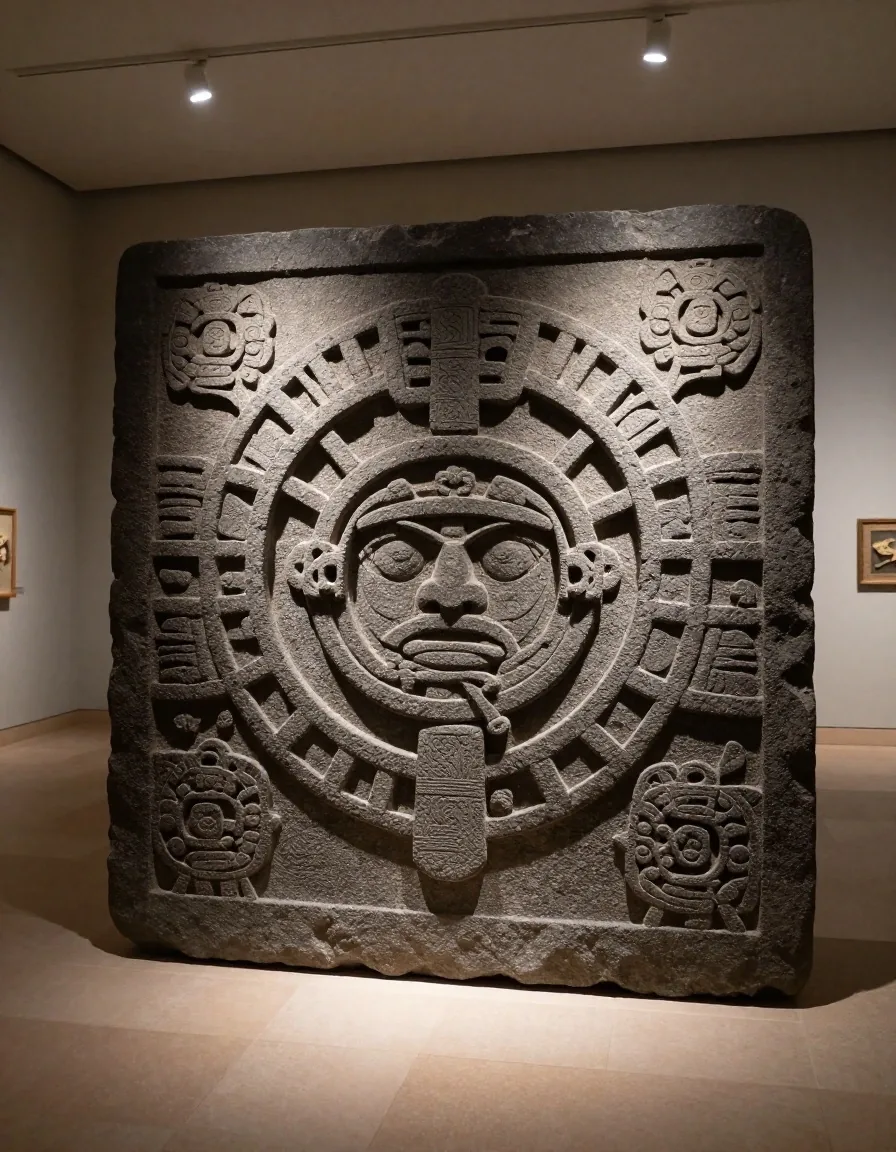
Restrictions on artificial lighting and mechanical supports prevent phototoxic degradation in ancient polychromies and erosion from vibrations in heritage scaffolding.
DIGITAL ACCESS AND CONTROLLED CAPACITY
Advance ticket purchase for popular museums
Certain venues with high international demand do not issue tickets at physical ticket offices or have extremely limited capacity, requiring prior purchase online. Knowing in advance which spaces operate under strict reservation avoids fruitless trips and downtime during cultural exploration days.
Frida Kahlo Museum
The Blue House
Exclusively digital tickets. There is no sale at the physical ticket office under any circumstances. It is essential to purchase them several weeks in advance on their web platform.
Luis Barragán House
World Heritage Site
Mandatory digital reservation subject to strict quarterly calendars. Group quotas are restricted to a small maximum number of people to preserve interior finishes.
Museo Anahuacalli
Rivera Pre-Hispanic Collection
Preferential digital sales during high season and weekends. If you purchased access for the Casa Azul, check if your ticket includes a courtesy pass for the same day or nearby dates.
Anthropology and Castle
Great National Museums
Although they have large banks of physical ticket offices, arriving between 09:00 and 10:30 in the morning avoids crowds of up to forty minutes on holidays and weekends.
MOBILITY AND INFRASTRUCTURE
Accessibility conditions for people with reduced mobility
Modern museums and those recently remodeled (such as the National Museum of Anthropology, the Museo Tamayo, and the Museo Soumaya) have access ramps, wheelchair elevators, and adapted restrooms.
However, in old colonial monuments in the Historic Center, such as the Palacio de Iturbide or seventeenth-century convents, stone steps and historic unevenness can limit autonomous access to upper floors. In the archaeological zones of Teotihuacán and Tlatelolco, the paths are mostly gravel and irregular dirt, which makes transit difficult for wheelchairs not equipped for rough terrain.
MONUMENTAL PRESERVATION PROVISIONS
Climbing pyramids at archaeological sites
Due to conservation provisions issued by the National Coordination of Archaeology of the INAH, visitor access to the top of the Pyramid of the Sun, the Pyramid of the Moon, and the Temple of the Feathered Serpent in Teotihuacán is permanently suspended.
This measure was taken to avoid irreversible mechanical wear of the ancient steps, prevent the detachment of consolidated stucco, and ensure the physical safety of travelers against serious falls. Visual contemplation and photography are carried out from the large ceremonial plazas at ground level.
CURATORIAL ORIENTATION AND LUGGAGE
Languages of museum labels and guided tours
The main institutions dependent on the INAH and top-tier museums present most of their explanatory labels translated into English alongside the original Spanish. In smaller specialized venues, libraries, or local site museums, curatorial information may be presented only in Spanish. Most venues have audio guides downloadable via QR codes in their lobbies.
To hire in-person tour guides at sites like Teotihuacán or the Historic Center, always verify that they carry the official laminated credential with a hologram issued by the Ministry of Tourism (SECTUR), a guarantee of verified academic and historical training.
Restrooms, cloakrooms, and luggage storage
Almost all museums in the capital have clean restrooms and free or coin-operated cloakroom modules where it is mandatory to deposit backpacks larger than twenty-five centimeters, wet umbrellas, and bulky items before entering the galleries. In the Teotihuacán archaeological zones, restrooms are located only at the exterior entrances (gates 1, 2, 3, and 5) and require a small cash fee for use. It is not allowed to enter archaeological sites or art museums with large travel suitcases; it is advised to leave them at the hotel or at formal luggage storage services at bus terminals.
QUICK RESOLUTION OF QUESTIONS
Additional frequently asked questions
Direct operational answers regarding urban coexistence, hydration in galleries, and practical recommendations for your itinerary.
Is it safe to walk through the Historic Center at night?
Can I enter museums with bottled water?
Are international credit cards accepted at INAH ticket offices?
What is the best time of day to visit Teotihuacán?
TRAVEL ASSISTANCE AND TOURS
Do you have a specific question about your itinerary?
If your group requires additional clarifications about intercity transfers, coordination with accredited official guides, or visits to limited-capacity venues, consult our thematic guides or write to our editorial team.
The Tourist Insight · Av. Paseo de la Reforma 50, Col. Juárez, 06600 Mexico City, CDMX
Direct assistance: +52 55 5207 8100 · Monday to Friday: 09:00 - 18:00